
If you manufacture products in India, you may have heard of BIS ISI Certification or the ISI Mark License. But is BIS certification mandatory for your product? What is the process, which documents are required, and how can you obtain an ISI Mark?
This guide explains BIS ISI Certification in India in simple terms, including eligibility, products covered, the certification process, documents, and common challenges.
What is BIS ISI Certification?
BIS ISI Certification is a product certification system administered by the Bureau of Indian Standards (BIS). Under Scheme-I, BIS assesses the manufacturer’s production and testing capabilities and verifies that the product conforms to the applicable Indian Standard. Successful manufacturers receive a licence to use the ISI Mark on certified products.
The ISI Mark indicates that the certified product conforms to the applicable Indian Standard and provides assurance of quality, safety and reliability.
BIS certification is generally voluntary. However, when the Government of India makes compliance mandatory through a Quality Control Order (QCO), manufacturers must obtain the applicable BIS licence before manufacturing, selling or distributing the notified product.
Is BIS ISI Certification Mandatory?
Yes, if your product is covered by a mandatory Quality Control Order (QCO).
For products covered under compulsory certification, the required BIS ISI Certification becomes a legal compliance requirement. Products covered by a QCO cannot be manufactured, imported, distributed or sold without the required Standard Mark under a valid BIS certification, subject to applicable exemptions.
Therefore, before applying for an ISI Mark License, manufacturers should first check whether their product and applicable Indian Standard fall under mandatory BIS certification.
Who Needs BIS Certification for Manufacturers?
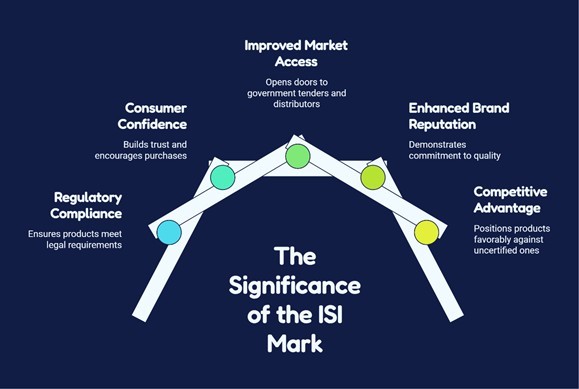
BIS Certification for Manufacturers may apply to:
- Indian manufacturers producing notified products
- MSMEs and large manufacturing companies
- Contract manufacturers
- Companies manufacturing products for private labels or brand owners
- Manufacturers whose products are covered by mandatory QCOs
The exact requirements depend on the product, Indian Standard, manufacturing facility and applicable BIS conformity assessment scheme.
Products Covered Under BIS ISI Certification

BIS covers a wide range of products under different standards and regulatory requirements. Depending on applicable QCOs, commonly regulated categories include:
- Electrical products
- Switches and electrical accessories
- Electrical cables
- Furnitures
- Water heaters
- Cement and steel products
- Plywood and construction materials
- Pressure cookers
- Household appliances
- LPG-related products
- Helmets and safety products
- Automotive components
- Toys and consumer products
The mandatory product list changes as new QCOs are notified. Manufacturers should therefore verify the current BIS product list rather than relying on an old list. BIS maintains the official list of products under compulsory certification.
BIS ISI Certification Process in India
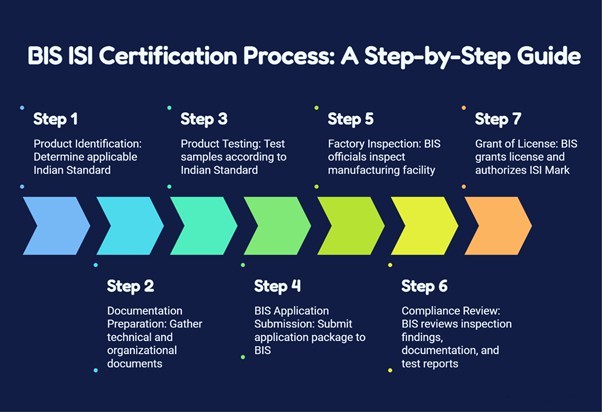
The ISI Registration India process generally involves the following stages:
1. Identify the Applicable Indian Standard
First, determine the correct Indian Standard (IS) applicable to your product. Correct product classification is essential because applying under the wrong standard can result in delays or rejection.
2. Check BIS Applicability
Verify whether your product is covered by a mandatory QCO and identify the applicable BIS certification scheme.
3. Prepare Documents
Prepare the required technical, manufacturing and business documents, including product specifications, manufacturing details, quality control information and testing-related documents.
4. Product Testing
Product samples are tested against the applicable Indian Standard through the required testing process. Testing requirements vary according to the product and standard.
5. Submit BIS Application
The application and supporting documents are submitted through the applicable BIS online process. BIS provides online facilities for manufacturers to apply for licences and track applications.
6. Factory Inspection
For Scheme-I certification, BIS assesses the manufacturing and testing capabilities of the manufacturing premises. Inspection can cover production processes, quality control, testing facilities and records.
7. Grant of ISI Mark License
After successful completion of the applicable documentation, testing and inspection requirements, BIS may grant the licence allowing the manufacturer to use the ISI Mark according to the applicable requirements.
Documents Required for BIS ISI Certification
The exact document list varies by product, but commonly required documents may include:
- Factory registration documents
- GST registration
- Manufacturing details
- Product specifications
- Manufacturing process flow chart
- Quality control documents
- Raw material details
- Machinery and testing equipment details
- Calibration records
- Test reports
- Authorized signatory documents
- Trademark documents, where applicable
Having technically accurate documents before filing can help reduce avoidable queries and delays.
How Long Does BIS ISI Certification Take?
There is no single fixed timeline for every product. The duration depends on the applicable Indian Standard, testing requirements, documentation, factory readiness, inspection, application processing and any queries raised during the process.
Therefore, manufacturers should avoid relying on a generic “fixed-day” promise and instead assess the timeline based on their specific product and factory.
Common Reasons for BIS Certification Delays
Manufacturers commonly face problems because of:
- Incorrect Indian Standard selection
- Incomplete documentation
- Product testing failures
- Inadequate testing facilities
- Factory inspection observations
- Quality control deficiencies
- Delayed responses to BIS queries
Proper preparation before submitting the application can significantly reduce these risks.
Why Choose a BIS ISI Consultant in India?
Working with an experienced BIS ISI Consultant India can simplify the certification process by providing support with:
- BIS applicability assessment
- Indian Standard identification
- Technical documentation
- Product testing coordination
- BIS application filing
- Factory inspection preparation
- Query and compliance support
- Licence-related assistance
- Ongoing compliance and renewal guidance
At Provenza India, we provide end-to-end assistance for manufacturers seeking BIS ISI Certification, from product applicability and documentation to testing, factory inspection and licence support.